

Shopify to Headless Hydrogen Build
NativePath
Headless Migration Hydrogen Development Custom Design Content Architecture Third-Party Integration Blog Migration

NativePath doesn’t sell supplements the way most brands do. Founded by Dr. Chad Walding, a Doctor of Physical Therapy, the company built its audience through education first—paleo seminars, a Facebook community of over 100,000, and a deep library of blog content and recipes that connect ancestral nutrition to everyday health decisions. By the time someone buys their first tub of collagen, they’ve usually read three articles, watched a video, and been on the email list for weeks. Content isn’t a marketing channel for NativePath. It’s the business model.
That made the decision to go headless unusually high-stakes. Moving to Shopify Hydrogen would deliver the performance the brand needed—faster pages, better Core Web Vitals, a modern frontend architecture. But headless builds have a well-known tradeoff: they’re fast for customers and powerful for developers, but they can lock out the content and marketing teams who need to publish, update, and experiment without filing engineering tickets.
For a brand that publishes recipes, health articles, and educational content as its primary acquisition engine, that tradeoff was not acceptable.
MTN Haus built the headless storefront on Shopify Hydrogen with a custom design, integrated the full third-party app ecosystem—subscriptions, reviews, and referral program—and solved the content problem by building a Builder.io layer with custom templates and pre-developed drag-and-drop blocks. The result: headless performance with full editorial control. Every page on the site, including all migrated blog posts and recipes, can be updated by the content team without touching code.
Here’s how MTN Haus made it work.
The Challenge
NativePath had scaled rapidly on a standard Shopify 2.0 theme, but the site’s performance wasn’t keeping up with the traffic the content strategy was generating. Slow page loads on blog posts and recipe pages—the exact pages driving the most organic traffic—meant the brand was paying to acquire visitors and then losing them to load times before they ever reached a product page.
A headless architecture was the obvious performance solution, but it created a different problem. NativePath’s content team publishes frequently—new recipes, health articles, product education, seasonal content—and the existing Shopify theme editor gave them the autonomy to do that without developer support. A conventional headless build would strip that away. Every blog post update, every new recipe layout, every promotional banner would become a developer task.
The third-party ecosystem added another layer of complexity. NativePath relies heavily on subscriptions, customer reviews, and a referral program—tools that integrate seamlessly with standard Shopify themes but require custom work to function in a headless environment. Each integration needed to work natively within the Hydrogen frontend without degrading the performance that justified going headless in the first place.
The Solution
Hydrogen Storefront with Custom Design
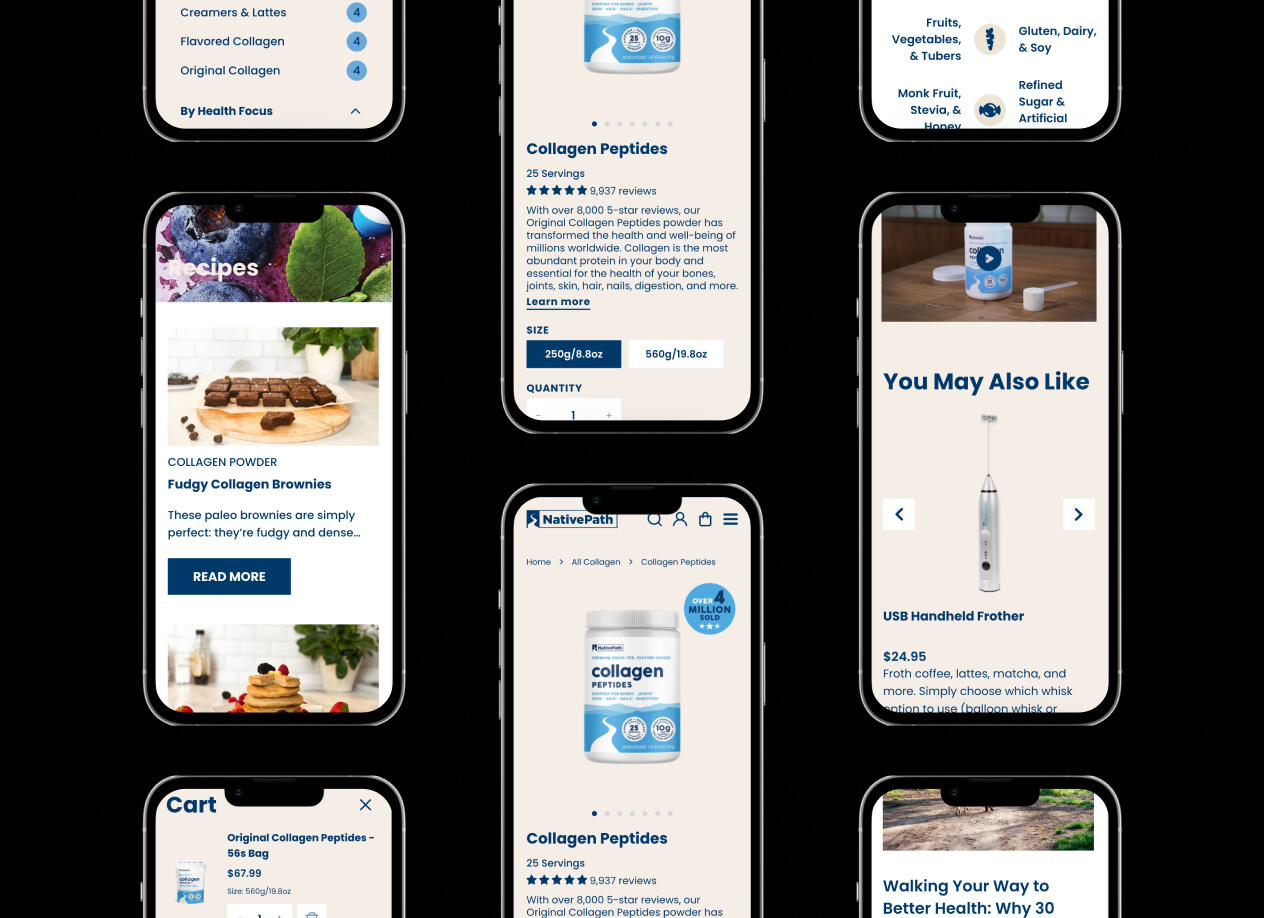
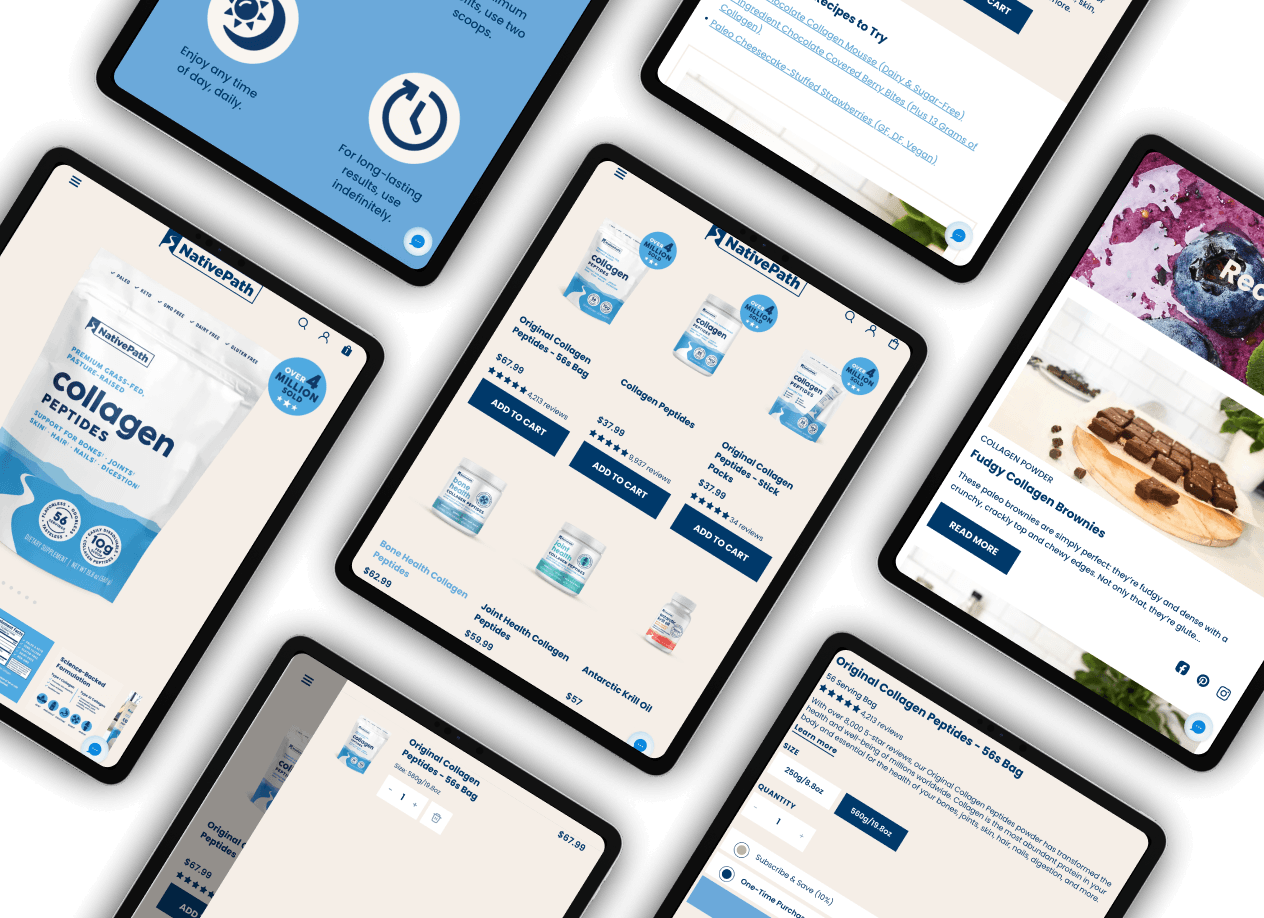
MTN Haus rebuilt the entire NativePath storefront on Shopify Hydrogen—a fully custom frontend optimized for speed. The design was created from scratch to reflect the brand’s wellness-first identity while taking full advantage of Hydrogen’s server-side rendering and streaming architecture. Product pages, collection pages, and the checkout flow all benefit from the performance headroom that headless provides.
Builder.io Content Layer
This is where the project diverges from a typical headless build. MTN Haus integrated Builder.io as the content management layer, but didn’t stop at a basic integration. The team built custom templates and a library of pre-developed content blocks that the NativePath editorial team can assemble using a drag-and-drop editor. Rich recipe pages, health articles, product education content, and promotional landing pages are all composed from these blocks—no code, no developer involvement.
All existing blog posts and recipes were migrated into this new system, so the content team inherited a full library of live content that they can update, restyle, and extend using the same drag-and-drop tools. The editorial workflow that existed on the Shopify 2.0 theme wasn’t just preserved—it was upgraded. The content team now has more layout flexibility than they had before, with better performance underneath.
Third-Party Integrations
MTN Haus integrated NativePath’s core third-party tools—subscriptions, reviews, and the referral program—directly into the Hydrogen frontend. These aren’t bolt-on widgets loading via script injection; they’re built into the application layer, which means they render with the page rather than after it. The subscription flow, review displays, and referral mechanics all function natively within the headless architecture without the performance penalty that third-party apps typically introduce on standard Shopify themes.

The Results
NativePath now runs on a headless Shopify storefront that performs like a modern web application but feels like a CMS to the people who manage it day to day:
- Headless performance, editorial freedom — every page on the site—product, content, blog, recipe—can be updated by the content team through Builder.io’s visual editor without writing code or filing developer tickets
- Faster content pages — the blog posts and recipe pages that drive NativePath’s organic acquisition now load on a server-rendered headless architecture, directly improving the experience for the visitors most likely to convert
- Third-party tools built in, not bolted on — subscriptions, reviews, and referral program integrated at the application layer, rendering with the page instead of loading after it
- Full blog migration — all existing content migrated into Builder.io’s system, giving the team a live library they can update and extend using drag-and-drop blocks
- Custom block library — pre-built, reusable content components that maintain design consistency while giving the editorial team the flexibility to create new page layouts on their own
The conventional wisdom is that going headless means choosing performance over flexibility. NativePath proves that’s a false choice—if the content layer is designed with as much care as the commerce layer. The team that built the brand on education and content still controls the site. They just do it faster now.






In The Spotlight

- Membership Platform Architecture
- Commerce Infrastructure
- Shopify + Middleware Engineering


Coming Soon
- Migration
- Website Development
- App Development

- Headless
- Webflow
- Middleware


Coming Soon

Coming Soon
- Custom Development
- UX Design
- Integrations

Coming Soon
- Custom Theme Development
- UX Design
- Product Configurator


Coming Soon
- Migration
- Custom Development
- Integration


Coming Soon
- New Shopify Build
- UX Design
- Branding